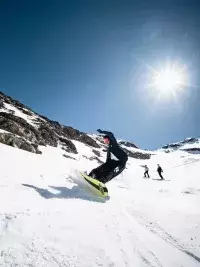
Off-piste skiing in Les Arcs offers great opportunities, but requires experience, caution, and the right equipment.
5 Tips for a Safe Off-Piste Adventure in Les Arcs
The Les Arcs ski area offers plenty of opportunities for off-piste enthusiasts. However, skiing outside marked trails involves risks and requires a good understanding of the terrain, weather conditions, and safety equipment. Here are our tips for enjoying off-piste skiing safely.

1. Learn about avalanche conditions and risks
Before heading out off-piste, check the Avalanche Risk Assessment Bulletin (BRA) published daily by Météo-France. This document provides essential information on:
- The avalanche risk level (from 1 to 5)
- The aspect of slopes at risk
- The quality of the snowpack
- Weather forecasts
You can access these bulletins at the resort’s information points or via Météo-France’s mobile apps.
It is also recommended that you consult with the ski patrol to obtain accurate information on avalanche risk and snowpack conditions.

2. Never go out alone
You should never go off-piste alone. Always ski in a group and let someone know your route and your expected return time.
3. Have the right equipment
The essential basic equipment for any off-piste outing includes:
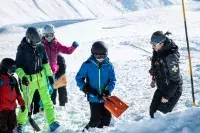
- Avalanche Transceiver (AT): a two-way radio device used to locate a person buried in an avalanche.
- Probe: a rigid pole used to precisely locate the victim under the snow.
- Shovel: essential for quickly digging out a buried person.
- Helmet: protects against head injuries in the event of a fall.
- Airbag backpack (optional): increases the chances of staying on the surface in the event of an avalanche.
Before setting out, test your avalanche transceiver, check the battery level, and activate transmit mode. Practice using this equipment regularly.
Training at the Avalanche Park
At the summit of Transarc, you can practice using your equipment at the Avalanche Park. This area is dedicated to learning avalanche search techniques with an avalanche transceiver. Open to everyone, it allows participants to use their own equipment to hone their skills.
4. A few habits to adopt
- Do not blindly follow tracks: they do not guarantee safety and may lead to dangerous areas.
- Maintain safe distances: if the terrain is unstable, ski one at a time and regroup in safe areas (sheltered from potential avalanches).
- Do not proceed if conditions are uncertain: An unstable snowpack, poor visibility, or excessive fatigue are valid reasons to postpone a trip.
5. Receive guidance from a professional
If you're new to backcountry skiing, we strongly recommend hiring a mountain guide or a qualified ski instructor. These professionals know the safe routes and can teach you the basics of mountain safety.