
Skiing is, above all, about having fun. To ensure that every day on the slopes is a pleasant memory, there are a few simple rules that will help you ski with greater peace of mind, protect others, and enjoy the mountains to the fullest. Speed, sharing the slopes, off-piste skiing: here are the best practices to follow before you strap on your skis.
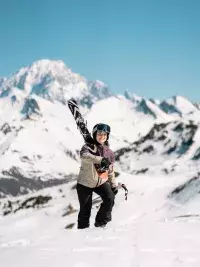
Am I beyond reproach? Are you sure about that?
A line that’s a little too close to another skier?
A speed that’s a little too ambitious?
A slightly impromptu off-piste run?
No matter how careful you are, nobody’s perfect.
So to keep skiing fun, safety is what lets you enjoy it right down to the very last turn.
Here’s a quick reminder of the basic rules!
1. On the slopes, control your speed
You don’t have to go fast to enjoy the thrill of skiing!
There’s nothing better than perfecting your snowplow turns—it’s a great way to get a full workout while staying in control.
Because controlling your speed means, above all, knowing how to adapt to your surroundings:
- Adjust your pace based on visibility, snow conditions, and crowd levels
- Anticipate your path and changes in direction; look ahead
- Be extra cautious in crowded areas and on the runs leading back to the resort
The key takeaway: slow down when conditions and the people around you require it.
Because control is the true hallmark of an excellent skier!
To take it further: try the Chronoski run
A fun and educational run designed to help you experience speed and learn to control it safely.
Start one at a time on a gentle slope, with a dedicated braking zone featuring a stopwatch, and a code of honor for skiing to remind you of best practices on the slopes.

2. On the slopes, as everywhere else, be considerate of others
The mountains are for everyone.
So are the slopes.
- The skier downstream always has the right of way: they can’t see you
- Keep your distance when passing others
- Pay special attention to children and beginner skiers
- Before setting off or starting up again, check that the path is clear
- Stay alert to your surroundings and what’s happening around you
If you fall:
- Quickly clear the slope to get to safety
- Stay visible and be careful when trying to retrieve your equipment
On the slopes, everyone has their own skill level, pace, and unexpected situations.
Respecting others means allowing everyone to enjoy themselves.
3. Off-piste = being informed, trained, guided, and equipped
Off-piste skiing involves turns that make you feel like you’re flying—an incredible sensation.
But off-piste skiing is never something you can just wing.
These are trips that require advance preparation. Here are the essential steps to follow.
- Stay Informed
- Check the Avalanche Risk Assessment Bulletin (BRA)
- Check with the ski patrollers about the day’s conditions
- Be properly equipped
- Avalanche transceiver, shovel, probe: required
- Helmet strongly recommended
- Airbag backpack: a real plus
- Be trained
- Knowing how to use your safety equipment is essential
- The Avalanche Park (Transarc summit) lets you practice avalanche transceiver search techniques
- Be accompanied
- Never go out alone
- Let someone know your route and your estimated return time
- Hire a guide or ski instructor if you’re new to off-piste skiing
When in doubt, don’t go.
The mountain will still be there tomorrow.
In the event of an accident
Contact the ski patrol dispatch center, dial 112, or notify the ski lift staff.
Provide the name of the trail and the marker number to ensure a quick response.
On-Mountain Rescue: +33 (0)4 79 07 85 66